
Environment and Green Areas
Significant environmental pollution is a legacy of the past industrial era. Two main issues that tackled by the Baku General Plan are to address key issues related to land and lake pollution as results of oil extraction and industrial use.
Based on an in-depth analysis, the Baku General Plan identifies priority areas for ecological remediation in the next 20 years:
Related to lakes treatment:
Boyuk Shor Lake
Khojahasan Lake
Gu Lake
Bulbula Lake
Related to land remediation:
Boyuk Shor - Binagadi-Balakhani Corridor
Khojahasan -Lokbatan Corridor
Former Industrial Area
SOCAR area in Surakhani
As a result of rapid urban growth, the city suffers from regular flooding, urban heat islands, air pollution and lack of green public space.
Those negative effects will be tackled through initiating a series of coordinated measures in the fields of public transport system development, utility infrastructure update, and comprehensive environmental protection.
Urban Public Green Spaces
The enhancement of the green and open space supply within the city is among the priority targets of Baku General Plan. In accordance with the “State Urban Planning Norms and Regulations (AzDTN 2.6-1)”, the Baku General Plan will take measures to increase the amount of urban green space to 8 sqm per capita.
Beyond the protection of existing green areas and the adequate provision of open spaces in new urban developments, this target will be achieved by implementing the following key projects:
Spacious parklands around Khojahasan Lake;
Long-term extension of Baku Boulevard, incl. parts of the Bibi Heybat area;
Transformation of lakeside areas of Boyuk Shor Lake, Zigh Lake, and Bulbula Lake into green leisure zones;
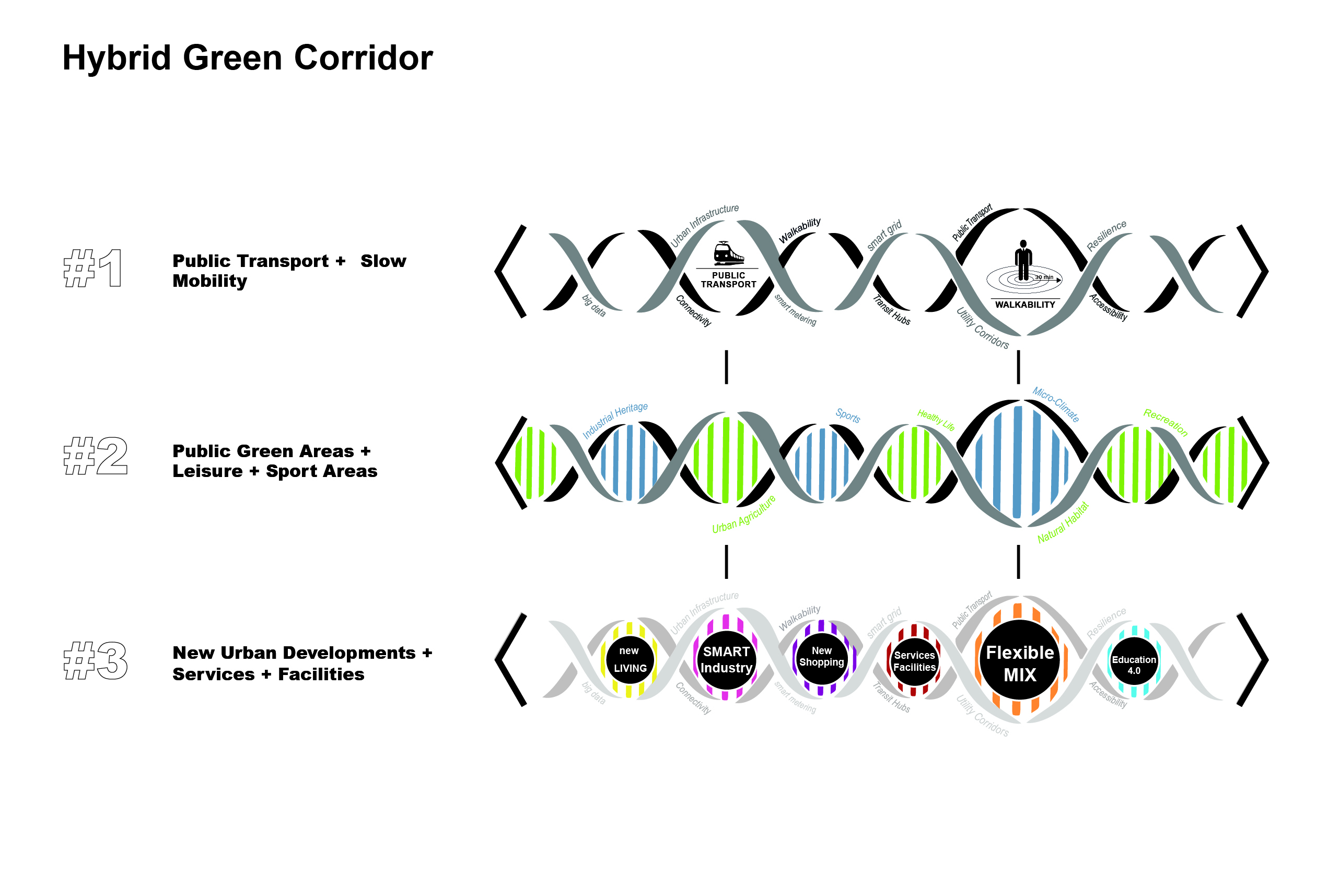
Implementation of a system of Hybrid Green Corridors throughout the city.
Hybrid green corridors
The "Hybrid Green Corridors" are main conceptual pillars of the Baku General Plan and combine various functions such as:
Depending on the urban context there are two types of Hybrid Green Corridors:
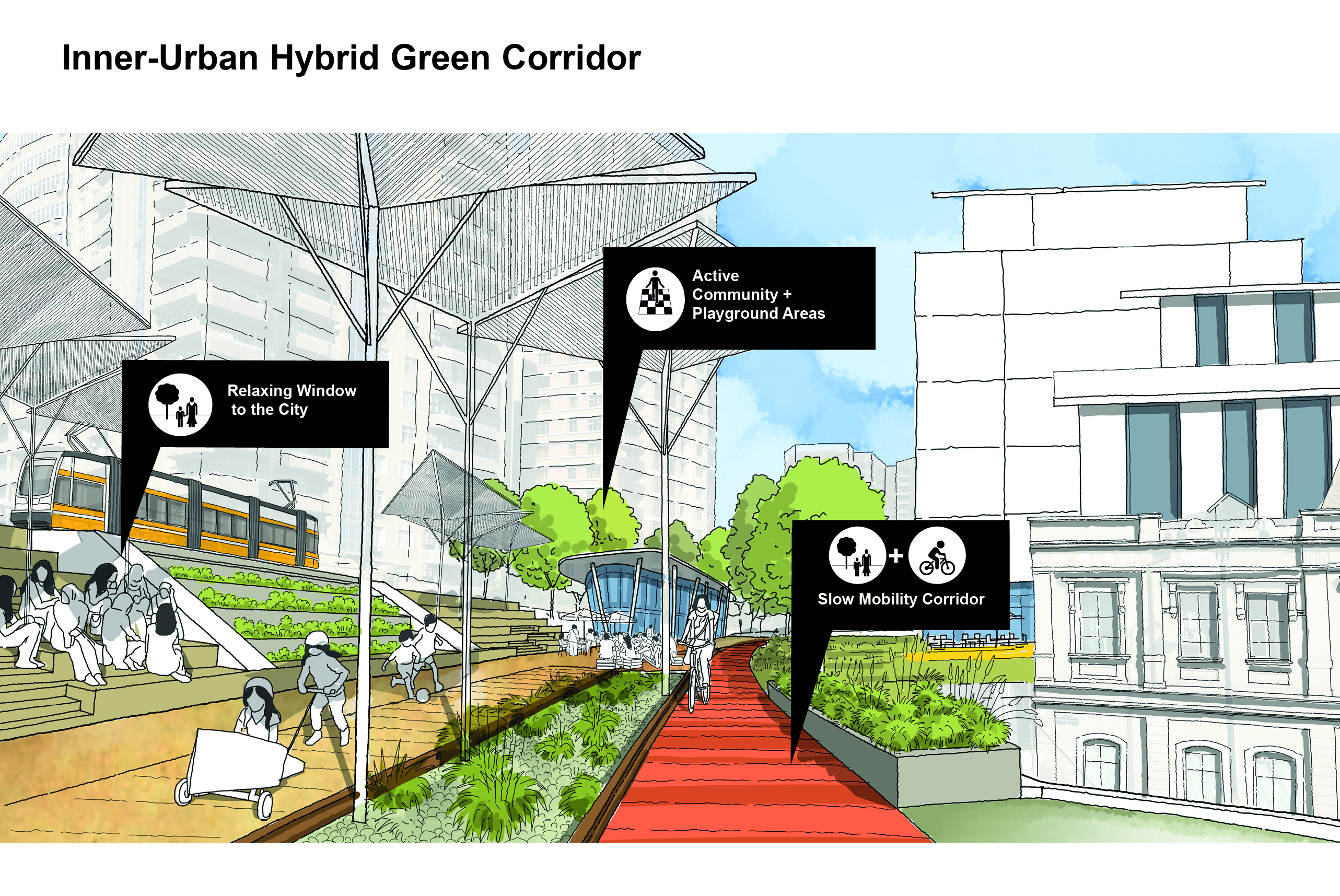
SAMPLE: Outer-Urban Hybrid Green Corridor (Khojahasan-Lokbatan)
The development of the Khojahasan - Lokbatan Hybrid Green Corridor is underpinned by the regeneration of the Khojasan Lake. The current concept includes decommissioning and clean-up of oil extraction activities in the northern part of the lake, land remediation, improvement to the wastewater infrastructure and construction of a new railway station in the area.
Within the park, it is envisaged to implement a Botanical Park which would display key native plant species. The area around Gu Lake is listed as an international bird area. By actively managing this asset, there is a great opportunity to develop a bird watching area of touristic significance.