Azerbaijan Presents Its Experience in Integrating the Sustainable Development Goals into Spatial Planning at the UN High-Level Political Forum
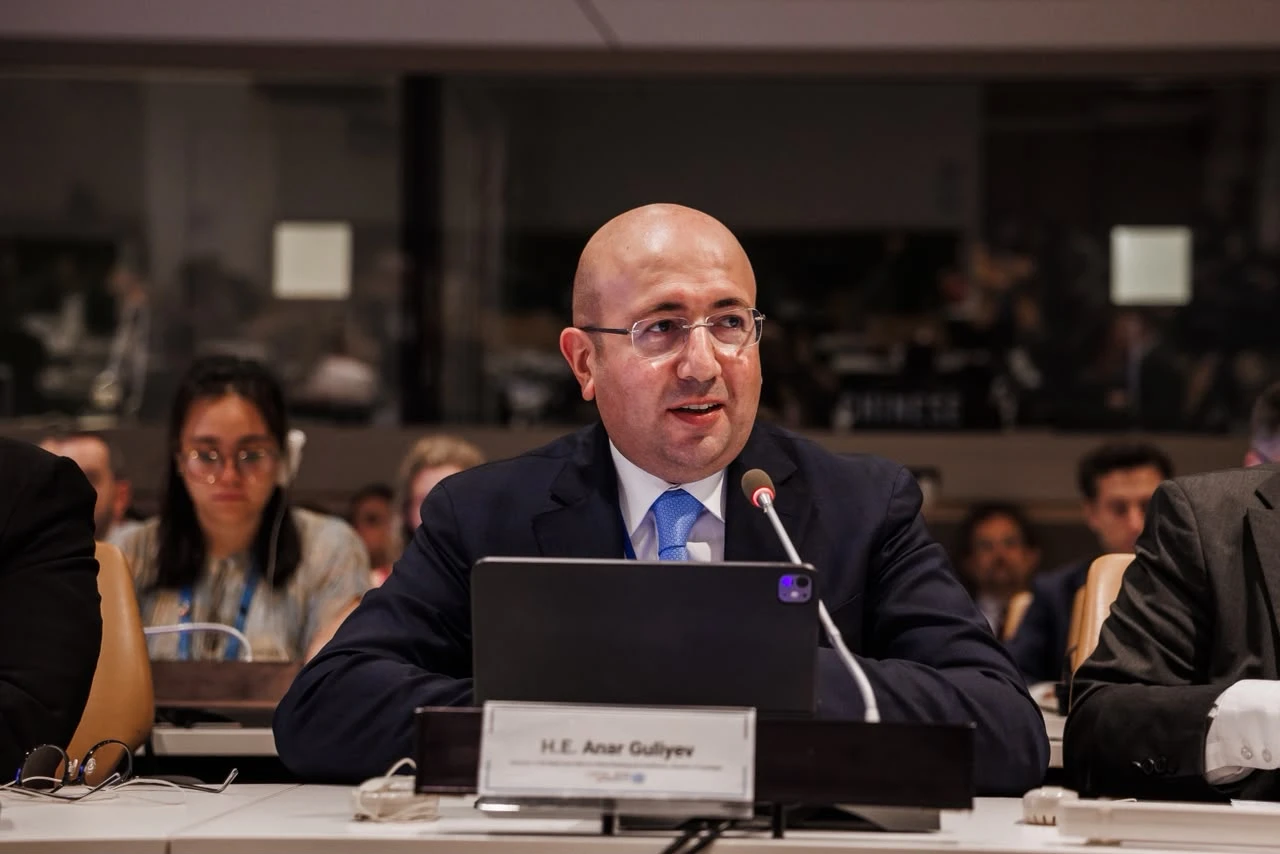
On 15 July, at the United Nations Headquarters in New York, Chairman of the State Committee on Urban Planning and Architecture of the Republic of Azerbaijan Anar Guliyev participated in the Local2030 Coalition Special Event, held as part of the High-Level Political Forum on Sustainable Development (HLPF). The event brought together representatives of various countries to exchange experiences and approaches to the localization of the Sustainable Development Goals (SDGs).
In his remarks, Anar Guliyev presented Azerbaijan's experience in localizing the Sustainable Development Goals, emphasizing that spatial planning is one of the key instruments for implementing the 2030 Agenda for Sustainable Development in the country. He noted that master plans have now been updated for 68 of Azerbaijan's 79 cities. These plans not only guide the spatial development of cities but also facilitate the implementation of the principles of the New Urban Agenda at the local level.
The Chairman highlighted that the master plans are developed through an integrated approach covering the efficient use of land resources, housing provision, sustainable transport, social infrastructure, and energy efficiency. This approach contributes to the implementation of SDG 1 (No Poverty), SDG 5 (Gender Equality), SDG 7 (Affordable and Clean Energy), SDG 9 (Industry, Innovation and Infrastructure), SDG 11 (Sustainable Cities and Communities), and SDG 17 (Partnerships for the Goals). He further noted that the master plans are prepared in close cooperation with regional and local authorities. This collaborative approach ensures that the specific characteristics of each area are taken into account, strengthens institutional capacity at the local level, and provides a solid foundation for investment decisions aligned with national development priorities.
Anar Guliyev also stated that the large-scale reconstruction and redevelopment programme underway in the Garabagh and East Zangazur Economic Regions represents a successful example of implementing the Sustainable Development Goals at the local level. He noted that the principles of sustainable development are being translated into practice through master plans developed on the basis of integrated spatial planning. These plans provide for the development of modern, safe, sustainable and inclusive settlements, while ensuring the systematic development of housing, transport, engineering and social infrastructure. To date, master plans have been approved for 8 of the region's 12 cities, as well as for 106 settlements and villages. Over the past five years, nearly 90,000 people have returned to their native lands, where they now live, work and study.
Addressing the reconstruction of the territories liberated from occupation, the Chairman also drew attention to the initiative of the President of the Republic of Azerbaijan, Ilham Aliyev, to recognize mine action as the 18th Sustainable Development Goal. He noted that Azerbaijan has established SDG 18 at the national level, recognizing mine action as one of the fundamental prerequisites for the safe return of the population, the recovery of the liberated territories, and their sustainable development.
The experience presented by Azerbaijan contributed to the international dialogue on the localization of the Sustainable Development Goals and the implementation of the New Urban Agenda.
_1784201029.jpeg)